简短通用版
适合用于快速介绍、名片背面的简介或社交媒体简介。
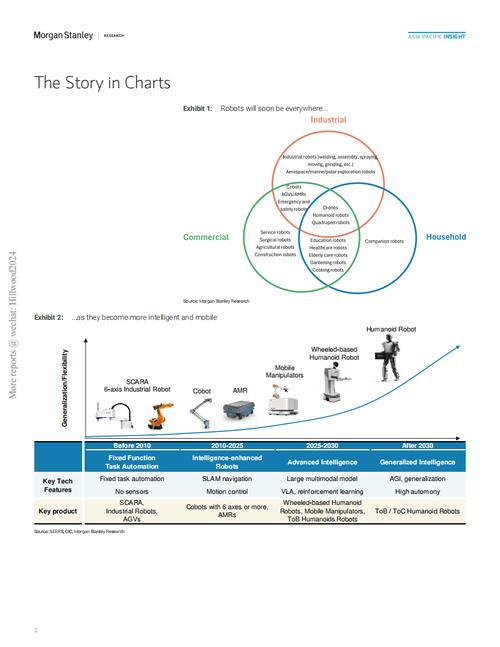
English: An intelligent robot is an advanced machine capable of perceiving its environment, making decisions, and performing tasks autonomously or semi-autonomously. It integrates AI, sensors, and sophisticated mechanics to interact with the physical world, adapt to new situations, and assist humans in various fields, from manufacturing to healthcare.
中文翻译: 智能机器人是一种先进的机器,能够感知环境、做出决策,并自主或半自主地执行任务,它融合了人工智能、传感器和精密机械,可以与物理世界互动、适应新情况,并在制造业、医疗保健等各个领域协助人类。
标准详细介绍版
适合用于产品手册、网站介绍、课堂报告或一般性介绍。
English: Intelligent robots represent a significant leap in automation and human-machine interaction. Unlike traditional, pre-programmed robots, intelligent robots are equipped with artificial intelligence (AI), machine learning, and advanced sensor systems like cameras, LiDAR, and tactile sensors.
This combination allows them to:
- Perceive and Understand: They interpret sensory data to build a dynamic map of their surroundings, recognize objects, and even understand human speech and gestures.
- Learn and Adapt: Through machine learning, they can improve their performance over time, learn from new data, and adapt to unexpected changes in their environment without being explicitly reprogrammed.
- Reason and Decide: AI algorithms enable them to process information, weigh options, and make intelligent decisions to achieve their goals, such as navigating around an obstacle or optimizing a workflow.
- Interact and Collaborate: Modern intelligent robots are designed to work safely and effectively alongside humans, understanding social cues and collaborating on complex tasks.
From industrial robots optimizing factory floors and autonomous vehicles navigating streets, to service robots assisting the elderly and surgical robots performing precise operations, intelligent robots are transforming industries and daily life, driving efficiency, safety, and innovation.
中文翻译: 智能机器人是自动化和人机交互领域的一次重大飞跃,与传统、预先编程的机器人不同,智能机器人配备了人工智能、机器学习和先进的传感器系统,如摄像头、激光雷达和触觉传感器。
这种结合使它们能够:
- 感知与理解: 它们解读传感器数据,以构建周围环境的动态地图,识别物体,甚至理解人类的言语和手势。
- 学习与适应: 通过机器学习,它们可以随着时间的推移提高性能,从新数据中学习,并适应环境中意想不到的变化,而无需被明确地重新编程。
- 推理与决策: 人工智能算法使它们能够处理信息、权衡选项并做出智能决策以实现其目标,例如绕过障碍物或优化工作流程。
- 互动与协作: 现代智能机器人被设计为能够与人类安全有效地协同工作,理解社交线索并协作完成复杂任务。
从优化工厂车间的工业机器人、在街道上行驶的自动驾驶汽车,到协助老年人的服务机器人和执行精确手术的医疗机器人,智能机器人正在改变各行各业和日常生活,推动效率、安全和创新。
要点提炼版
适合用于PPT演示、宣传材料或需要快速抓住重点的场合。
Intelligent Robots: A Key Driver of the Future
- Core Definition: A sophisticated robot that uses AI to perceive, learn, reason, and act autonomously in the real world.
- Key Technologies:
- Artificial Intelligence (AI): The "brain" for decision-making and problem-solving.
- Machine Learning (ML): Enables learning from experience and improving performance.
- Advanced Sensors: Provide "senses" (vision, touch, hearing) to interact with the environment.
- Robotic Actuators: The "muscles" for precise movement and task execution.
- Core Capabilities:
- Autonomy: Can operate with minimal human intervention.
- Adaptability: Adjusts to new and unforeseen situations.
- Interaction: Communicates and collaborates with humans and other machines.
- Major Applications:
- Industrial: Manufacturing, logistics, quality control (e.g., collaborative robots).
- Healthcare: Surgery, rehabilitation, elder care, laboratory automation.
- Service: Hospitality (hotels, restaurants), retail, customer service.
- Exploration & Defense: Space exploration, deep-sea research, bomb disposal.
- Personal: Home assistants, cleaning robots, educational toys.
- The Future Trend: Moving towards greater social intelligence, emotional connection, and seamless integration into all aspects of human life and work.
中文翻译: 智能机器人:未来的关键驱动力
- 核心定义: 一种使用人工智能在现实世界中自主感知、学习、推理和行动的先进机器人。
- 关键技术:
- 人工智能: 用于决策和问题解决的“大脑”。
- 机器学习: 使其能够从经验中学习和提高性能。
- 先进传感器: 提供“感官”(视觉、触觉、听觉)以与环境互动。
- 机器人执行器: 用于精确移动和执行任务的“肌肉”。
- 核心能力:
- 自主性: 可以在极少人工干预的情况下运行。
- 适应性: 能够适应新的和无法预见的情况。
- 互动性: 与人类和其他机器进行沟通和协作。
- 主要应用:
- 工业领域: 制造业、物流、质量控制(协作机器人)。
- 医疗领域: 手术、康复、老年护理、实验室自动化。
- 服务领域: 酒店、餐厅、零售、客户服务。
- 探索与国防: 太空探索、深海研究、拆弹。
- 个人领域: 家用助手、清洁机器人、教育玩具。
- 未来趋势: 朝着更强的社交智能、情感连接以及与人类生活和工作各方面的无缝融合方向发展。